
In July of 2022, Brent Smart sent me an email. He’d just been announced as incoming CMO at Telstra, Australia’s largest telco and one of the country’s biggest brands.
He wanted to know whether Telstra had ever won a Cannes Lion.
I looked through the Lions archives. I could see back to 2001. And I found that Telstra had won just one Lion - a bronze Media Lion, in 2011.
A single bronze Lion, in 22 years, for a $25B business, in a market that’s famous for producing Lion-winning work, was a telling sign. Winning Lions is, of course, not the be all and end all of marketing. But almost never having done so was a signal of the posture of the brand. It suggested a brand that hadn’t been much focused on producing marketing that was creatively appealing to consumers or capable of generating a positive emotional connection with its audience.
That suggestion was reflected in the state of the brand. Much of Australia actively disliked Telstra. A well-known comedian had joked that the company should change its name to ‘Fucking Telstra’. When Brent told his father he'd taken the job, his father said “Jesus, that's the hardest job in Australia, getting people to like Telstra.”
That sentiment had impacted the value of the Telstra brand. In Brand Finance’s 2020 Global 500, the brand’s value dropped 24% to $11.8 billion and it lost its long-held title as Australia's most valuable brand to Woolworths. Optus overtook Telstra to become the country's strongest telecommunications brand. By 2022, the brand’s value had fallen to $10.2 billion. Telstra’s story was of a brand whose value was being eroded by weakening brand equity, while its smaller rivals got stronger.
Four years later, Brent left the role on a high.
Telstra’s brand value had grown 21% to $12.4 billion. Annual marketing-generated revenue grew from $657 million to $961 million, even as media spend was under increasing pressure and had fallen 13%. The total ROI on Telstra’s marketing leapt from $6.10 to $10.40.
Brent inherited a brand that had acted against every principle of Future Demand. During his four years he re-engineered the marketing organization to balance brand and performance properly, and produced creative, emotional, broadly-targeted brand advertising. He implemented proper econometric measurement to make the longer-term effects of brand visible to the organization. And in doing so, he put the reputation of the Telstra brand, its value, and its commercial contribution back in growth.
What follows is how he did it, in three phases. First he ensured the mandate to act. Then he diagnosed the brand properly enough to have a point of view about it. Then he built the machine to make great work repeatedly. One thing runs through all three, and Brent names it as the single most important aspect of his marketing leadership: conviction.
PHASE ONE
Ensure You Get the Mandate
Before you can change a brand, you have to win the right to change it. Not the job title - the actual permission to act, and the standing to act without asking. Everything else is built on this.
One thing Brent ensured before taking the Telstra job – and also before taking his previous CMO role at insurer IAG – was that the company knew who they were hiring. Brent sees a job interview as being as much about him interviewing the CEO as the CEO interviewing him. And in both cases he was clear that they’d be hiring a creatively-focused CMO who would require autonomy on how budgets were allocated, who he chose as agency partners, and what kind of creative work went out the door. Had they not given him confidence that he’d have the freedom to operate, he would have turned those roles down.
This deliberate calibration before the fact avoids the often agonizing process of trying to wrest control of the fundamentals once you get into the role. It’s something that most people don’t do, and it’s one of the biggest contributors to Brent’s success.
Play 1: Sell Brand as the Fix for a Problem the CEO Already Has
Brent was on the fence about the job. The money was only a small step up from IAG. No agency creative worth their stripes wanted to go near the brand. Through the entire hiring process, nobody mentioned brand once - it was all commercial and all very ‘telco’.
Two things in a single conversation with the incoming CEO, Vicki Brady, changed his mind.
The first was what she wanted. She wasn't asking for a brand. She was asking for a reputation. Brent could sense a real frustration in her that the company's reputation didn't match what she knew was happening inside it. That was his opening, because reputation - especially among people who aren't your customers and never experience your product - is brand by another name.
“She wanted to lead a company with a better reputation. So straight away I go: okay, how do you change reputation? And particularly for non-customers, it's brand.”
The second was smaller and more telling. She asked what he thought of the current advertising. He told her honestly, and it wasn't flattering. She liked the work. He didn't agree with her. And she was completely open to hearing it. That was the signal he was actually testing for. Not agreement. Permission to disagree.
“She was open to the fact that I had a point of view, and that I would clearly change the current advertising. That was probably the most important bit. She's open, and she'll let me change it.”
There's a timing point underneath this. Brent arrived alongside a new CEO, and he thinks that matters enormously. A new chief executive wants to put their mark on things, and is open to change in a way that a settled one never is.
PLAY 1: How to do it: Sell brand in the language of the problem your CEO already has.
Don't walk into the interview or the first board meeting asking for brand investment. Find out what your CEO is already frustrated by, and show them brand is the mechanism that fixes it. At Telstra the frustration was reputation, and reputation among non-customers is almost pure brand, because they have no product experience to judge you on. Framed that way, you're solving their problem, not asking them to fund yours.
And use the interview to test one thing: will this leader let you disagree with them? Give them an honest critique of their current work and watch what happens. The reason it matters isn't comfort - it's that the first time you propose something genuinely divisive, you'll need them to back your judgment in the room, not just tolerate it in private. If they can't take a critique in an interview, they won't back you in the room.
Play 2: Be the Chief. Make the Moves That Are Yours to Make.
The trap for a new CMO is well worn. Pour everything into short-term results so year one looks good, and you build nothing lasting. Spend year one quietly diagnosing, and the business asks what on earth you've been doing for a year. Brent's answer to the second trap was to move fast on the things that were simply his to decide - the moves that signal change loudly and cost nothing if they miss.
He embraced Telstra’s sponsorship of Rugby League with a campaign around footy season – a play that supported a long-running partnership that no one would question.
He ran a big Christmas ad, knowing that it was a key retail period for the brand and that the sales numbers were always going to look good.
Telstra owned the ‘turn your phones off’ cinema slot before every film at one Australian cinema chain,but was wasting that prime brand moment on a rational rewards promotion - which his film-loving son told him was the first thing he had to change.
“Nobody's going to get mad at you if you get that wrong. Nobody's going to say my iPhone sales are down because you changed the cinema sponsorship ad.”
Brent and team went on to make the “Put Your Phone on Silent Films” with acclaimed director Dougal Wilson.
Those campaigns didn’t have a huge amount of scrutiny, because they weren’t business critical. And were opportunities to make creative, emotional marketing that would begin to build the brand again.
PLAY 2: How to do it: Be the chief. Make the moves that are yours to make.
Every new CMO has a small stock of no-regret moves: the sponsorship asset nobody's looked at in five years, the seasonal moment nobody briefed, the obvious fix your own family points out. They can't hurt the business and they announce that something has changed. Make them early and don't ask for permission - they're genuinely yours to decide, and asking on the trivial stuff trains everyone to expect marketing to wait for approval.
If your title is Chief Marketing Officer, be the chief of marketing.
PHASE TWO
Diagnose the Brand
You can’t have conviction about a brand you don't understand, and you cannot lead one you can't describe. This phase is about getting a point of view honest and sharp enough to build everything else on.
Play 3: The Budget Is the Strategy. Read It First.
Within a week, Brent walked into the room where the team pinned up all the work for a quarterly review. It was a rude shock, and he was glad he got it early. The volume was extraordinary and almost none of it was visible: point of sale, emails, endless templated performance executions, built without craft, in every colour of the palette, with no discernible brand at all.
“It looked like an average person could have created most of it on PowerPoint. No care, no design, no craft. Every colour in the rainbow, don't we at least have a consistent brand colour or something?”
The bigger revelation was the spend. Enormous money going out the door on things that would never move the brand, almost nothing on production, and a fortune on agency fees. Telstra was spending 80% of their budget on performance and other short-term trading initiatives, and just 20% on brand-focused media.
Brent treats budget allocation not as an output of strategy but as the strategy itself. It's the most honest document in any marketing department, because it records what the company actually believes rather than what it says in the deck.
“The way you set up your money - that's your strategy. Allocating the budget is the strategy.”
The same principle drove him out of the building, early, into store visits and the retail team, on the grounds that the people at the point of sale always have the truest read on what's happening.
“A desk is a dangerous place to do marketing from.”
PLAY 3: How to do it: Audit the budget and the work before you commission any research.
Before anything else, look at two things: all of the work in one place, and the full allocation of the budget. What share is going to brand versus performance, to production versus fees, to work no one outside the company will ever notice? The answers tell you more about the real strategy than any strategy document will. Then get out of head office and spend time on the frontline where sales actually happen. It's the cheapest insight you have.
Play 4: Find the One Artefact Everyone Remembers
Brent’s new boss, Chief Customer Officer Brad Whitcomb, arrived a few months into Brent’s tenure and asked a simple question: how would you describe the persona of the Telstra brand?
Brent had nothing.
“It's big, it's Australian, it's a great network. I just had nothing. And I could see him looking at me.”
He could produce consideration scores and tracking metrics all day. He could not describe the brand. That gap is the tell: the company was measuring the brand without understanding it. So he commissioned an ethnographic study with a deliberate brief - he wanted the language customers used, not more numbers. The researcher came back with about a hundred and twenty slides, and buried right at the end, almost as an afterthought, was a set of drawings: customers' own incredibly unflattering pictures of how they saw the brand: An unapproachable suit. The Monopoly man ‘robbing us little people’. A bully standing over someone smaller.
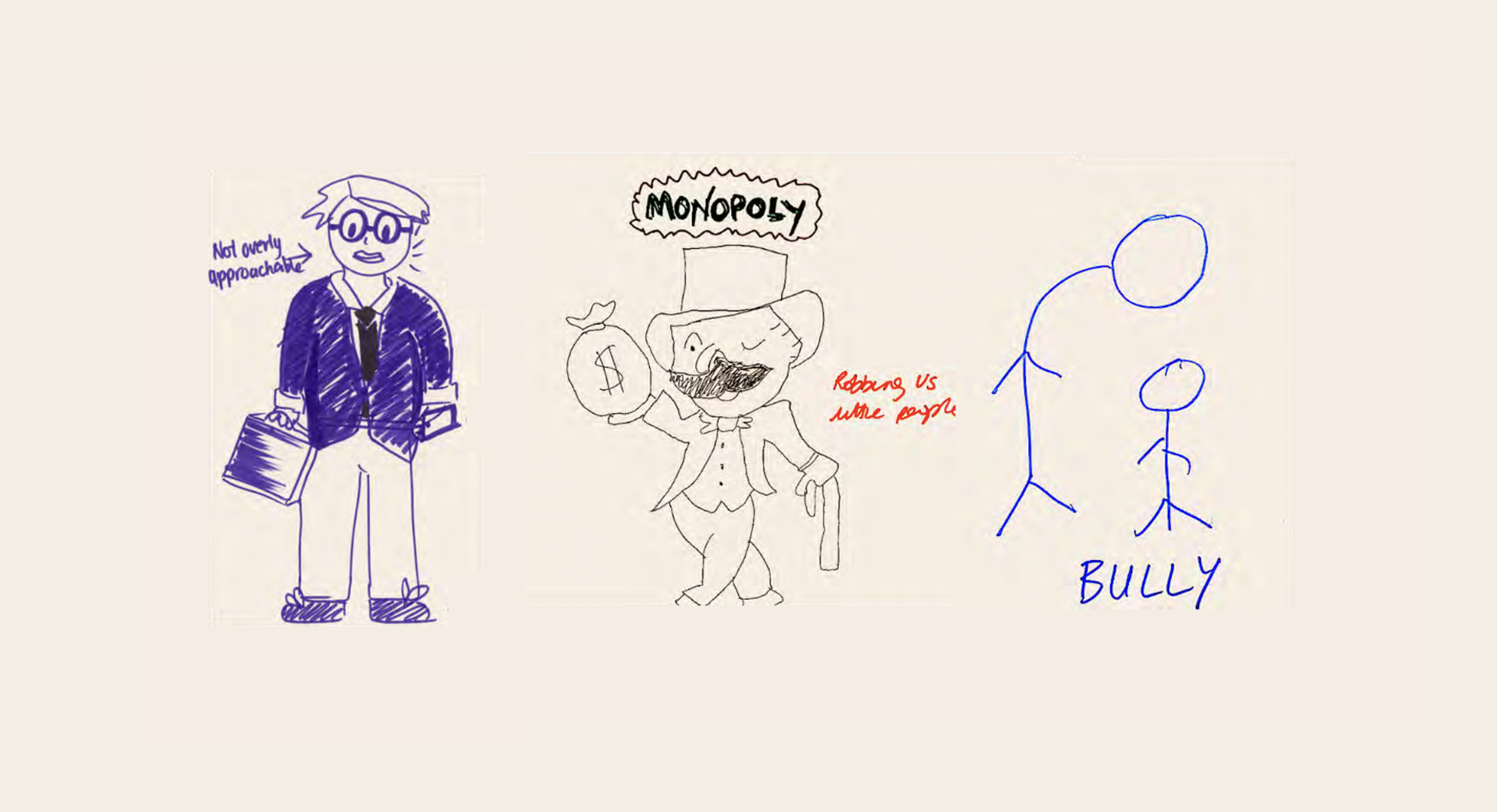
“I went: they're amazing. Give me that.”
Those drawings became the centrepiece of the brand strategy, and he used them for three and a half years. They were what the leadership team remembered and referred back to, what he showed the store staff at the frontline conference. They travelled through the company in a way no metric ever did. And they did the thing most marketers are too frightened to do internally, which is show the leadership team exactly how badly people saw them.
Out of the drawings and the reputation analysis came the diagnosis. Different customer groups held wildly different views, and for one large group nothing Telstra did operationally was ever going to matter - they weren't experiencing the network, they'd simply decided they didn't like the company. That produced the line that carried the whole strategy, plain enough that anyone could repeat it:
“If you want to change how people feel about the brand, change how the brand feels.”
His greatest satisfaction was hearing hardened commercial people say it back to him. No jargon. No reposition or reputation architecture. Everyone got it instantly. That's the test of the artefact: not whether it's clever, but whether the sales guys repeat it unprompted.
PLAY 4: How to do it: Find the one artefact everyone remembers, and use it for years.
Numbers describe your brand's performance. They don't describe your brand. If you can't answer 'what is the persona of this brand' in a sentence, commission research designed to produce language and images, not more tracking. Find the single artefact people will remember and repeat, be brave enough to make it the unflattering truth, and then use it relentlessly. One picture the leadership team can't get out of their heads is worth more than a hundred charts.
PHASE THREE
Build the Machine
Once you know what the brand needs, you build the things that make great work repeatable rather than lucky: a budget actually weighted towards brand, the proof to defend it, the team capability behind it, and the creative model to produce it. This is the slow, unglamorous work that most of years one and two actually consist of.
Play 5: Prove Brand Pays, Then Move the Money
The budget audit in Play 3 told Brent what was wrong: almost everything sat in performance, almost nothing in brand. Correcting that is the central act of a performance-to-brand transformation, and the most frightening one, because performance arrives with dashboards full of proof and brand, at the start, has almost none. You don't win that argument in a slide. You win it with a result.
So he ran a holdout. In Adelaide, one of Australia’s smaller cities, he shifted the 80:20 performance to brand split to 50:50, then let it ride for four months. He didn’t ask permission – the investment was about half a percentage point of the annual budget, so he knew nobody would notice.
Four months later, sales in Adelaide were running fourteen percent above the national average. That result allowed him to make the case to shift the entire budget to a 50:50 split.
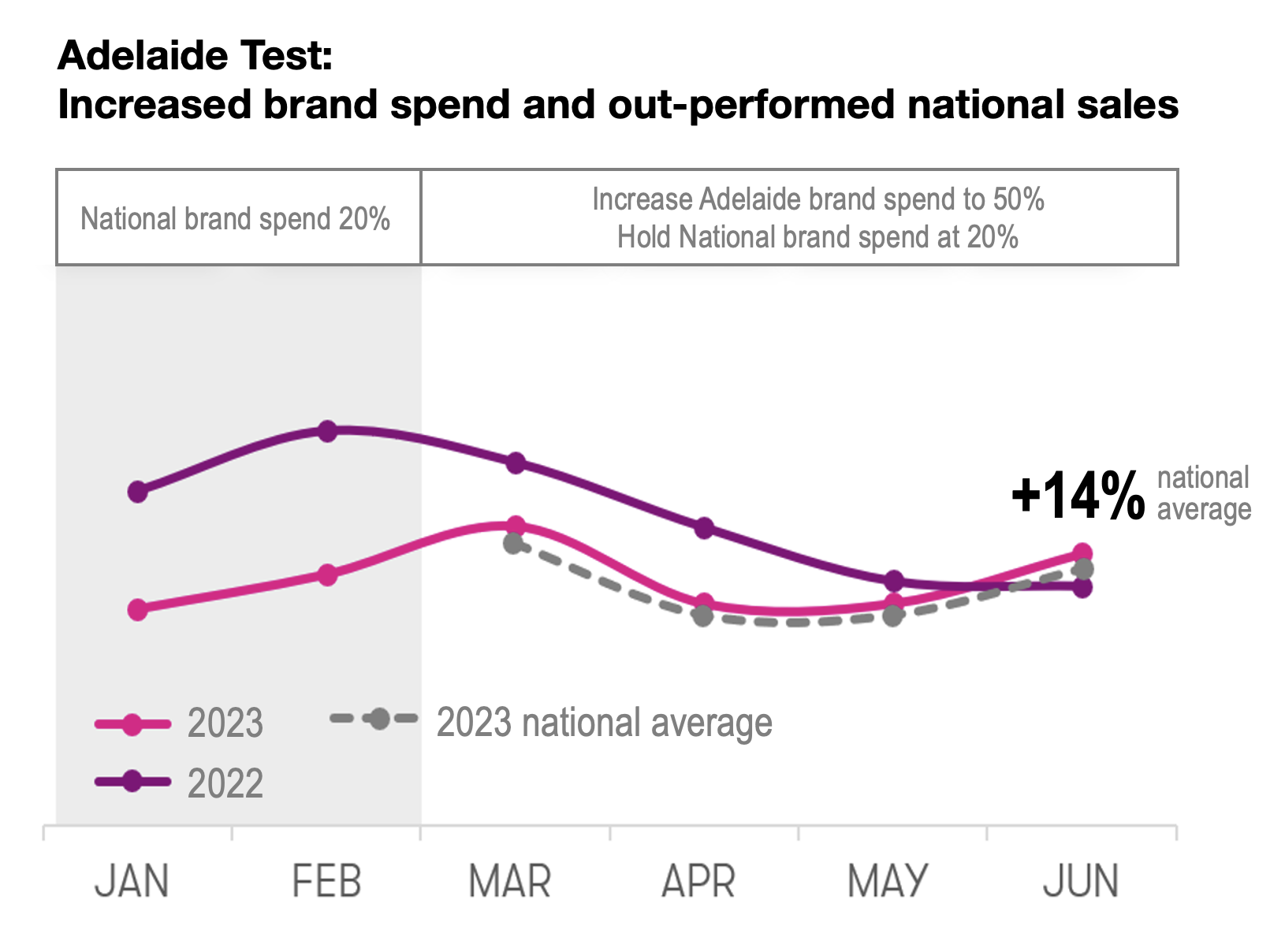
The timing was as deliberate as the design. He ran it early enough that the result landed before the new July budget year, which is what let him carry a heavier brand weighting into the whole of the next year’s allocation.
PLAY 5: How to do it: Prove brand pays in one market, then move the money everywhere.
To shift a performance-heavy budget towards brand, don’t argue the theory – run a geographic holdout. Pick one market and implement the balance you’re aiming for. Let it run longer than a few weeks so that the longer-term results have time to show up. Do it in one contained market for a rounding error of the total budget. And time it to finish before your annual budget is set, so a good result can actually change the allocation for the year ahead. And note what this earns you – not permission for what you just did, which was too small to need it, but proof for the much bigger move you’re about to make.
Play 6: Start the Measurement on Day One, and Report One Number
Brent started building Telstra’s econometric model on the day he joined. It took eighteen months to produce a usable answer. Part of that was the data – multiple sources knitted together, then cleared through Telstra’s rigourous testing for cyber security and privacy review. Part of it was that the model then needed testing and refining before anyone could trust it.
The design decisions mattered more than the delay. He insisted on nested models so the two-year effects of brand could flow through rather than being judged quarterly. And he refused to build it against total revenue, because marketing cannot credibly claim a $25 billion revenue base.
“Most people want to measure brand quarterly. I said no, I’m going to measure it over two years. And we’re building it on new connection revenue – we can’t claim the whole of Telstra’s revenues are driven by marketing.”
The payoff was two and a half years of clean data on brand versus performance by the time he left. If he’d started a year later, he’d have had eighteen months, which isn’t enough to see what he needed to see. Alongside the model he built something simpler and, internally, more useful: a single blended brand equity index from the four measures that mattered strategically – top of mind, momentum, sentiment, and premium, the willingness to pay more.
“There’s something powerful about one score, not four. The leadership team could get their head around it.”
PLAY 6: How to do it: Commission the model in week one, and report a single number.
Econometric modelling takes time to implement, and its value compounds with the length of the data series - so start on day one even if you can't use it for eighteen months. Build it with nested models so long-term brand effects surface, and anchor it to a revenue line you can credibly claim, not total revenue or profit. Then resist reporting a scorecard. Pick the three or four genuinely strategic measures, blend them into one index, and report that. A single number that can be tracked against competitors gets understood and acted on. A dashboard of twelve gets ignored.
Play 7: Fix the Confidence Before the Creative
In year one, Brent didn't relaunch the brand or change agencies. He ran a creative capability audit, and the finding shaped everything after it. Telstra's problem wasn't creative talent. It was creative confidence.
So he built a programme around that single diagnosis: a 1-10 creative spectrum to measure the quality of the creative work – which they called ‘The Creative Dial’. A quarterly marking of the work against that Dial. Training, coaching, and shared standards for what good looked like. He appointed a Head of Creative Excellence and put that role on his leadership team, alongside Product, Media, Operations and Martech - because that placement tells everyone creative matters as much as everything else.
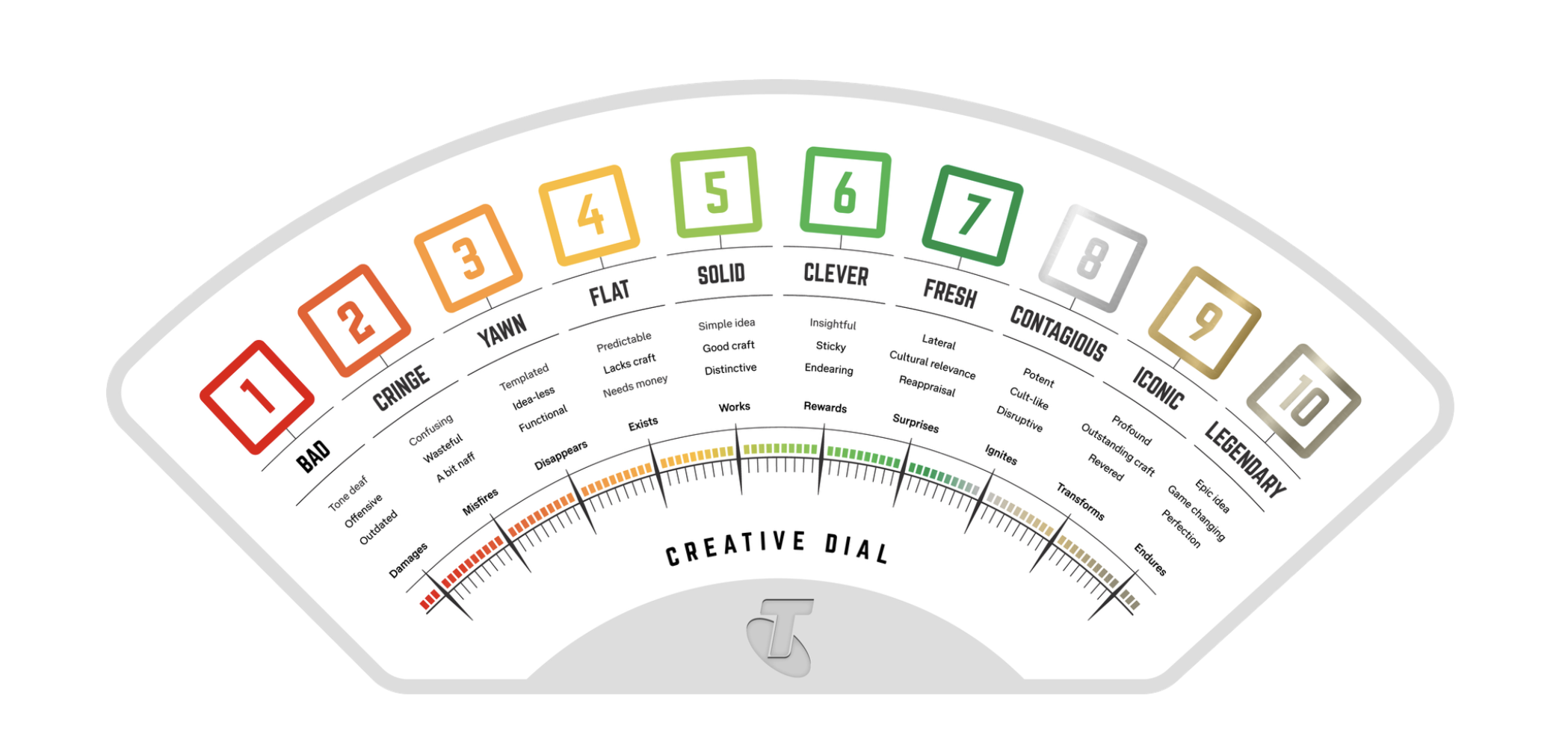
Then he set an ambition everyone laughed at: the company with one bronze Lion in twenty years would become the most creative brand in their part of the world.
The team split cleanly, and he was ready for it. Half resented being marked. Half said they felt like they were in marketing again for the first time in five years. His culture scores dropped in year one and he didn't chase them.
“You can't build a team, just as you can't build advertising, for the lowest common denominator. My culture score took a temporary hit , but you can’t worry about that, as long as the work is great.”
Some of the people who disliked the new culture left Telstra - which Brent saw not as a failure, but as the process working.
PLAY 7: How to do it: Diagnose the capability gap, and build the system before the work.
Before you change agencies or relaunch anything, audit your team's creative capability and find what's actually broken. Confidence, craft, briefing and ambition are different problems needing different fixes, and most in-house teams have been trained out of judgement rather than born without it. Then build the machinery: a shared standard, a regular cadence of marking work against it, coaching, and a senior creative role at your leadership table. Set an ambition that sounds absurd. Accept that it'll be polarising and your culture scores will suffer for a year. The people who leave over it are the ones who were hiding.
Play 8: Put Your Best Partner on the Biggest Work
The agency change came after the foundations, not before, and the reason was specific. Brent wanted the brand in the hands of a world-class creative who would refuse to compromise it and would challenge him - because the path of least resistance on a brand Telstra's size is to accept work that's merely good enough.
The obstacle was scale. The agency who could do the best work – Sydney’s Bear Meets Eagle on Fire, led by Micah Walker, was small, and Telstra produces around six hundred briefs a year. It needed volume, speed and strategy, which Brent is blunt about being the gap.
So it became a design problem, not a pitch problem: could he build a system around Micah? The answer was +61, a model that put the small creative shop at the centre of the brand work and handed everything else to the much larger TBWA. This corrected a mistake he'd made at IAG, where he'd used the independent agency on challenger projects at the edges.
“That's the mistake. Do the opposite. Get them on the big stuff that really moves the brand.”
The other half of the model came from a failure. Obsessed early on with the money going into trading and retail, Brent tried to make it work harder - a distinctive, funny fifteen-second retail format. He made half a dozen of them, ran two, and killed it. Telco offers are too complicated to be able to land them in fifteen seconds and also deliver emotion and creativity. It taught him to focus the performance work on informational content, delivered in a targeted way – aligning with the data that shows that converting current demand is best done with that kind of work.
“Let the short be short. That was a big learning for me.”
The performance work became what they called ‘brand fabric’: simple, clean, unmistakably Telstra through design alone, making no attempt to be clever. The personality lives in the brand work. The offers stay offers.
PLAY 8: How to do it: Put your best creative partner at the centre, and let the short work be short.
If you bring in a small independent agency, resist the instinct to give them the challenger projects at the edges. Put them on the work that actually moves the brand, and build a system around them for the volume, speed and strategy they can't cover. Design the model around the creative relationship rather than forcing the relationship into your existing model. And separate brand from performance properly - don't make your promotional work try to do the brand job. Make it simple, clean and unmistakably yours through design, and focus the brand work on creating future demand.
THE THROUGH-LINE: Conviction
Ask Brent for the single most important thing he does, and the answer isn't in any of the three phases. It runs through all of them. It's the posture that makes every play above actually work.
The problem, in his diagnosis, is that most marketers present internally in ways that make it easy to say no to them. They ask for approval, which invites a decision they may not like. They defer to research, so the point of view belongs to the research, not to them. They lead with data, which engages the rational brain - and the rational brain can always find a reason the numbers don't add up.
“It's very easy to say no to data. It's very easy for the maths not to add up the way you see the maths add up.”
His alternative is emotional and deliberate. ‘Conviction’ is much harder to refuse. He tests it against ordinary experience: how hard is it to say no to your kids when they genuinely believe in something? And it's contagious - people who are uncertain look to whoever is certain.
“When they see you have belief, they think: oh, I can believe this too.”
Asked how a less confident marketer summons this, his most useful answer is about the work, not personality. On creative, conviction comes down to whether you actually love the work.
“Do you love it, or do you just kind of like it? If you bought the work completely and you love it, you can't fake that.”
The rest comes from taking the title seriously. He quotes General Norman Schwarzkopf - when placed in charge, take charge - and pairs conviction with constant education, in plain language. He reckons he presented brand strategy to a hundred team meetings at Telstra, to anyone who'd listen, network engineers included. He brought the effectiveness research to the commercial teams. He gave the incoming CFO of the Consumer Division my first book, The Case for Creativity, on his first day, and the CFO read it.
The reward is a shift he says happened faster than people expected. Stakeholders became cheerleaders. Once the work got cultural traction and stakeholders’ kids started liking the ads, the whole relationship changed – “dad works at a place that's a little bit cooler now”. That, more than any metric, is what carries a brand transformation through the years it takes.
THE THROUGH-LINE: How to do it: Stop making it easy to say no.
Have a point of view and lead with it. Don't put the research or the data in front of your own conviction - use them to support it, not replace it. Belief is far harder to refuse than a spreadsheet, and it spreads to the people around you who are less sure. Educate constantly, in plain words, to anyone who'll listen. Be honest about what marketing can and can't fix. And watch how fast stakeholders turn into cheerleaders once the work is good enough to be proud of.
THE RESULTS
Between 2022 when Brent started, and 2026 when he left, the value of Telstra’s brand had increased 21% - from $10.2 billion to $12.4 billion. On Brand Finance’s Brand Strength Index of Australian brands, Telstra moved from 17th place to 9th place. The company spent 13% less on media, but generated 46% more marketing-generated revenue. Overall marketing ROI went from $6.10 to $10.40.
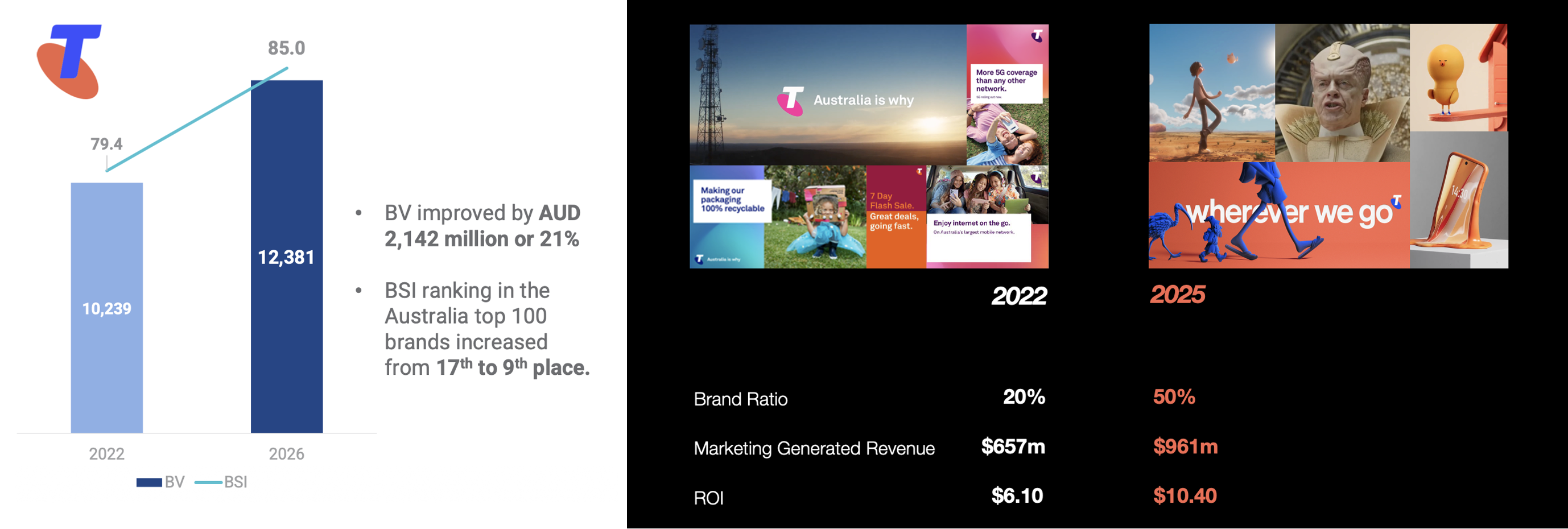
By shifting from 80% performance to a 50:50 split of brand and performance, and by running simple, functional ads to convert current demand and creative, emotional ads to build future demand, the performance of both performance and brand increased significantly.
Brent took the brand to performance split from 22:78 when he joined in 2022, to 48:52 by 2025. As mentioned earlier, this drove a +46% increase in marketing generated revenue, an incremental $304m. But when you dig under these numbers further, you see that in real terms, the realignment of brand and performance weights caused actual spend on performance media to be down 42% over this time period. Not only did overall revenue increase, but revenue generated from performance media also increased by +17% over the same period, despite significantly less spend. This highlights that when future demand is built via brand spend in prior quarters, it leads to current demand that can be captured more efficiently with stronger conversion rates.
Telstra got much more back from their marketing investment, recognised with a nod for Australia’s most memorable ad. If you look at Australia’s top 20 ad spenders, Telstra does not appear on the list. When you compare this with the list of Australia’s most memorable ads, five of the top 10 are also amongst the biggest spenders, they are buying recognition. Yet Telstra is at number 1 on the list with significantly less spend and is the only brand with two ads on the list.,
The reputation of the brand (the CEO’s main concern) improved - in its 2025 annual report, Telstra cited improved reputation (as measured by reputation measurement firm RepTrak) among its headline achievements over the three year period.
And Telstra went from the brand that had won a single bronze Lion in 22 years, to the brand that won the 2025 Film Craft Grand Prix alongside 7 other Cannes Lions during Brent’s tenure.
The Telstra Playbook at a Glance
Phase One - Ensure the Mandate
Play 1: Sell brand as the fix for a problem your CEO already has, test whether they'll let you disagree, and earn a mandate big enough to draw on when it counts.
Play 2: Be the chief. Make the no-regret moves that are yours to make, don’t hide behind research and procurement.
Phase Two - Diagnose the Brand
Play 3: Audit the budget and the work before any research. The budget allocation is the real strategy.
Play 4: Find the one artefact everyone remembers, make it the unflattering truth, and use it for years.
Phase Three - Build the Machine
Play 5: Prove brand pays in one market with a geographic holdout, then move the money before the budget is set.
Play 6: Start the econometric model on day one, and report a single blended number, not a dashboard.
Play 7: Fix the confidence before the creative. Build the system before the work, and expect it to be polarising.
Play 8: Put your best partner on the biggest work, and let the short work be short.
The Through-Line
Conviction: Stop making it easy to say no. Lead with belief, educate in plain language, and watch stakeholders become cheerleaders.
Telstra’s story is one of a very large brand, with a serious budget and the ability to work with best-in-breed agency partners to produce world-class above the line advertising.
While smaller brands usually lack the financial means to campaign at the scale of a brand like Telstra, the lessons of Brent’s journey can be just as powerfully acted on. Ensuring the mandate and diagnosing the brand are important steps for any CMO at any scale. And building a fit-for-scale machine is achievable for most companies. Econometric modelling is becoming affordable and accessible to smaller brands. And if you’re working with smaller agency partners, the lesson of putting the best creative thinkers on the most important work still holds.
And for large brand CMOs looking to use creativity to turn a brand around and exploit the benefits of creating future demand, I don’t know of a better example than Brent’s tenure at Telstra.